Is this you? Or do you exclusively represent this speaker?

Theresa Payton speaker

Theresa Payton

Pioneering Cybersecurity, AI Innovation, and Digital Trust for the Modern Age

About

Gender: Female
Nationality: United States
Languages: English
Travels from: United States

Engagement Types

Websites

Speakers FAQ

Biography Highlights

  • First female White House Chief Information Officer under President George W. Bush.​
  • CEO of Fortalice Solutions, a leading digital security firm.​
  • Renowned advisor to Fortune 500 Boards, CEOs, and technology leaders.​
  • U.S. patent co-inventor in security design and authority on AI, privacy, and safety.​
  • Media personality and keynote speaker featured on national news and the CBS TV series “Hunted”.​
  • Sought-after expert for topics including cybercrime, digital transformation, fraud, and women in leadership.​

Biography

Theresa Payton: Leading with Vision and Vigilance in Cybersecurity and AI

Theresa Payton stands as one of technology’s foremost innovators, shaping the future of digital security and transformation with clarity, integrity, and influential leadership. Making history as the first female Chief Information Officer at the White House under President George W. Bush, her service set a lasting benchmark for secure, customer-centered innovation at the highest levels of government.

Starting her career in banking, Theresa quickly set herself apart with a strategic mindset and a strong client-first approach—briefing her institution’s board at just 23. Since then, she has led advanced teams in M&A technology integration, driven customer-focused digital transformation initiatives, and consistently delivered cost savings and new revenue through forward-thinking technological solutions.

As CEO of Fortalice Solutions, Theresa remains a leader at the forefront of cutting-edge AI and digital protection. She holds a U.S. patent in security design, reinforcing her standing as an authority in safeguarding people, systems, and organizations. Her expertise spans consulting for Fortune 500 boards and executives on AI, privacy, fraud prevention, and emerging technologies, always ensuring proactive defenses against today’s rapidly evolving digital threats.

Widely known for her warm, relatable style, Theresa simplifies complex technology across major media outlets, provides live demonstrations of cybercrime tactics, and shares real-world insights from law enforcement collaborations. Her ability to inform and inspire shines through her keynote presentations and her role as Deputy Commander of Intelligence on CBS’s “Hunted.” Theresa’s journey—from the White House to global stages, while being a dedicated mom of three and dynamic CEO—embodies resilience, vision, and grace.

Why Book Theresa Payton as a Speaker?

Booking Theresa Payton brings one of the most engaging and authoritative voices in cybersecurity, AI, and digital transformation to your event. Her presentations are known for:

  • Making complex digital topics accessible, relevant, and actionable for any audience.
  • Demonstrating the latest cybercrime tradecraft through compelling stories and hands-on examples.
  • Inspiring confidence through practical strategies and proven leadership lessons from government, enterprise, and personal life.
  • Earning rave reviews for her warmth, clarity, and ability to equip attendees with tools they can immediately put into practice.

Theresa customizes her content for every audience—from technical teams to executive leadership—ensuring attendees leave informed, empowered, and ready to navigate emerging digital risks with confidence and innovation. She consistently receives exceptional feedback for her expertise, empathy, and ability to connect deeply with groups, making her an extraordinary addition to any event.


Videos

Showreels

Media, podcast appearances and interviews

Popular Talks

Few technological developments of the last century have fueled as much curiosity, misinformation and fear as AI. In this highly-engaging, jargon-free presentation, Theresa unpacks AI’s transformative power while exposing its looming risks, then demonstrates how our businesses, security and individual daily lives are being impacted by them. With anonymized stories from law enforcement’s front lines and stunning live demonstrations that reveal the tradecraft of modern cybercriminals, Theresa will equip you with practical actions to harness AI’s vast potential while protecting yourself, your clients and your organization.

Available: In person, Virtually

Balancing innovation and security in a rapidly evolving digital world requires know-how, sensitivity and constant vigilance. From streamlining operations to enhancing customer experiences, Theresa shares strategies for driving transformation while safeguarding your organization’s critical assets. With compelling case studies and easily-understood, actionable takeaways, Theresa will show you how to future-proof your organization and lead confidently in the age of relentless cyber threats.

Available: In person, Virtually

Theresa shares her amazing journey of resilience and determination as a business professional, wife and mom of three that led her to the most visible position in the tech world, White House CIO. And that’s before she became a CEO, one of the world’s leading media voices on technology and cybersecurity and star of the hit CBS TV series, “Hunted.” Drawing from her experiences leading in high-stakes environments, she reveals how family and purpose have been her guiding lights in balancing home life, career, and service. Theresa’s uplifting message will inspire you to lead boldly, embrace challenges with grace, and thrive in every role you’re called to fulfill.

Available: In person, Virtually

Theresa'S

Testimonials

Books

Theresa Payton book

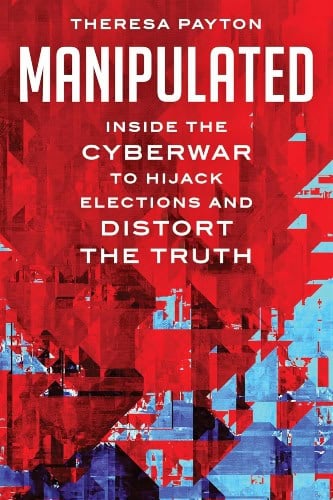
Manipulated: Inside the Cyberwar to Hijack Elections and Distort the Truth
Cybersecurity expert Theresa Payton tells battlefront stories from the global war being conducted through clicks, swipes, internet access, technical backdoors and massive espionage schemes. She investigates the cyberwarriors who are planning tomorrow’s attacks, weaving a fascinating yet bone-chilling tale of Artificial Intelligent mutations carrying out attacks without human intervention, “deepfake” videos that look real to the naked eye, and chatbots that beget other chatbots. Finally, Payton offers readers telltale signs that their most fundamental beliefs are being meddled with and actions they can take or demand that corporations and elected officials must take before it is too late. Payton reveals: How digital voting machines, voting online, and automatic registration may boost turnout but make us more vulnerable to cyberattacks.How trolls from Russia and other nations actively stroke discord among Americans in falsely-generated controversies over race relations, vaccinations, fracking, and other social issues.Whether what we have uncovered from the Mueller investigation so far is only what they wanted us to know.

Read more..

Manipulated: Inside the Cyberwar to Hijack Elections and Distort the Truth

Cybersecurity expert Theresa Payton tells battlefront stories from the global war being conducted through clicks, swipes, internet access, technical backdoors and massive espionage schemes. She investigates the cyberwarriors who are planning tomorrow’s attacks, weaving a fascinating yet bone-chilling tale of Artificial Intelligent mutations carrying out attacks without human intervention, “deepfake” videos that look real to the naked eye, and chatbots that beget other chatbots. Finally, Payton offers readers telltale signs that their most fundamental beliefs are being meddled with and actions they can take or demand that corporations and elected officials must take before it is too late. Payton reveals: How digital voting machines, voting online, and automatic registration may boost turnout but make us more vulnerable to cyberattacks.How trolls from Russia and other nations actively stroke discord among Americans in falsely-generated controversies over race relations, vaccinations, fracking, and other social issues.Whether what we have uncovered from the Mueller investigation so far is only what they wanted us to know.
Theresa Payton book

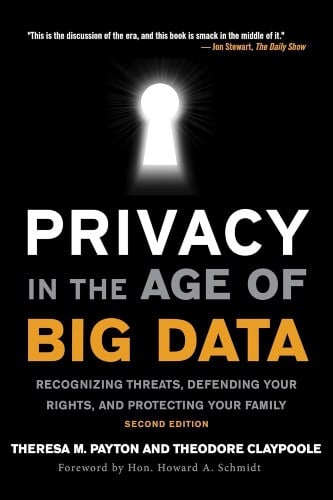
Privacy in the Age of Big Data: Recognizing Threats, Defending Your Rights, and Protecting Your Family Second Edition
A thorough update to a classic in the field of privacy and big data. We have a global privacy problem. The average person provides more information about themselves to more outsiders than any time in history. Corporations, governments and even our neighbors can know where we are at times, can quickly learn our preferences and priorities and see who we meet. The past decade has brought deep changes in the collection of our private information, the regulation of that collection, and in people’s sensitivity to loss of privacy. The nascent privacy-threatening technology trends of a decade ago have blossomed into relentless data-capturing systems that police and companies have come to rely on. To address the expansion of personal data capture, entire data regulatory regimes have arisen throughout the world, with new regulations added each year. People are more concerned, regulators are more aggressive, yet data collection continues to increase with consequences around the world. Social media use has fragmented in the past five years, spreading personal information over dozens of platforms. Even most of our new televisions have started collecting second-by-second information about our households recently, and some of those televisions can recognize the individuals watching and the devices they carry. Amazon just activated a new worldwide network using bandwidth from personal wifi of Echo devices and Ring security systems. The beat of new intrusions never seems to end. These data trends are relentless, and yet response to the pandemic accelerated them. Rapid development of “contactless everything” became the norm. Contact tracing apps became acceptable. QR codes for everything from menus to contact information were created quickly. Businesses are faced with hybrid in office and remote workforces. More people are dependent on online and mobile technologies for food, medicine, and even human connection. And each of these contacts can be captured somewhere and logged in a file for marketing or surveillance. People want to keep their lives private, but they don’t know how. The second edition of Privacy in the Age of Big Data addresses the significant advances in data-driven technology, their intrusion deeper in our lives, the limits on data collection newly required by governments in North America and Europe, and the new security challenges of world rife with ransomware and hacking. This thoroughly updated edition demonstrates personal privacy vulnerabilities and shows ways to live a safer, more private life. Other privacy books tend to focus deeply on the evils of large tech companies or more academic and technical concerns. But Privacy in the Age of Big Data, second edition, helps regular people understand the privacy threats and vulnerabilities in their daily lives and will provide solutions for maintaining better privacy while enjoying a modern life. Unlike other books, this one shows what you can do to make a difference to understand your current digital footprint and what you need to do to claw back your privacy and secure it in the future. While PRIVACY IN THE AGE OF BIG DATA will have cross-sectional appeal to many demographics, working adults 25-60 and CEOs and Boards of businesses are the primary demographic–young enough to know we need to do something to protect privacy and old enough to remember what happens when we haven’t in the past. With down-to-earth prose and examples pulled from daily life, the writing style will attract buyers of all education levels.

Read more..

Privacy in the Age of Big Data: Recognizing Threats, Defending Your Rights, and Protecting Your Family Second Edition

A thorough update to a classic in the field of privacy and big data. We have a global privacy problem. The average person provides more information about themselves to more outsiders than any time in history. Corporations, governments and even our neighbors can know where we are at times, can quickly learn our preferences and priorities and see who we meet. The past decade has brought deep changes in the collection of our private information, the regulation of that collection, and in people’s sensitivity to loss of privacy. The nascent privacy-threatening technology trends of a decade ago have blossomed into relentless data-capturing systems that police and companies have come to rely on. To address the expansion of personal data capture, entire data regulatory regimes have arisen throughout the world, with new regulations added each year. People are more concerned, regulators are more aggressive, yet data collection continues to increase with consequences around the world. Social media use has fragmented in the past five years, spreading personal information over dozens of platforms. Even most of our new televisions have started collecting second-by-second information about our households recently, and some of those televisions can recognize the individuals watching and the devices they carry. Amazon just activated a new worldwide network using bandwidth from personal wifi of Echo devices and Ring security systems. The beat of new intrusions never seems to end. These data trends are relentless, and yet response to the pandemic accelerated them. Rapid development of “contactless everything” became the norm. Contact tracing apps became acceptable. QR codes for everything from menus to contact information were created quickly. Businesses are faced with hybrid in office and remote workforces. More people are dependent on online and mobile technologies for food, medicine, and even human connection. And each of these contacts can be captured somewhere and logged in a file for marketing or surveillance. People want to keep their lives private, but they don’t know how. The second edition of Privacy in the Age of Big Data addresses the significant advances in data-driven technology, their intrusion deeper in our lives, the limits on data collection newly required by governments in North America and Europe, and the new security challenges of world rife with ransomware and hacking. This thoroughly updated edition demonstrates personal privacy vulnerabilities and shows ways to live a safer, more private life. Other privacy books tend to focus deeply on the evils of large tech companies or more academic and technical concerns. But Privacy in the Age of Big Data, second edition, helps regular people understand the privacy threats and vulnerabilities in their daily lives and will provide solutions for maintaining better privacy while enjoying a modern life. Unlike other books, this one shows what you can do to make a difference to understand your current digital footprint and what you need to do to claw back your privacy and secure it in the future. While PRIVACY IN THE AGE OF BIG DATA will have cross-sectional appeal to many demographics, working adults 25-60 and CEOs and Boards of businesses are the primary demographic--young enough to know we need to do something to protect privacy and old enough to remember what happens when we haven’t in the past. With down-to-earth prose and examples pulled from daily life, the writing style will attract buyers of all education levels.
Theresa Payton book

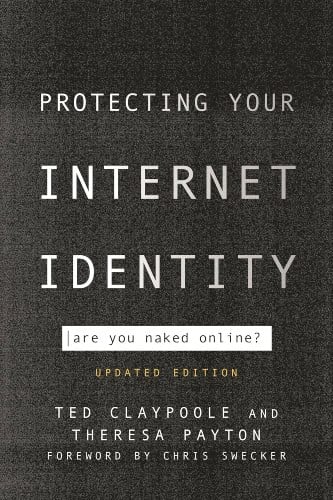
Protecting Your Internet Identity: Are You Naked Online?
People research everything online – shopping, school, jobs, travel – and other people. Your online persona is your new front door. It is likely the first thing that new friends and colleagues learn about you. In the years since this book was first published, the Internet profile and reputation have grown more important in the vital human activities of work, school and relationships. This updated edition explores the various ways that people may use your Internet identity, including the ways bad guys can bully, stalk or steal from you aided by the information they find about you online. The authors look into the Edward Snowden revelations and the government’s voracious appetite for personal data. A new chapter on the right to be forgotten explores the origins and current effects of this new legal concept, and shows how the new right could affect us all. Timely information helping to protect your children on the Internet and guarding your business’s online reputation has also been added. The state of Internet anonymity has been exposed to scrutiny lately, and the authors explore how anonymous you can really choose to be when conducting activity on the web. The growth of social networks is also addressed as a way to project your best image and to protect yourself from embarrassing statements. Building on the first book, this new edition has everything you need to know to protect yourself, your family, and your reputation online.

Read more..

Protecting Your Internet Identity: Are You Naked Online?

People research everything online – shopping, school, jobs, travel – and other people. Your online persona is your new front door. It is likely the first thing that new friends and colleagues learn about you. In the years since this book was first published, the Internet profile and reputation have grown more important in the vital human activities of work, school and relationships. This updated edition explores the various ways that people may use your Internet identity, including the ways bad guys can bully, stalk or steal from you aided by the information they find about you online. The authors look into the Edward Snowden revelations and the government’s voracious appetite for personal data. A new chapter on the right to be forgotten explores the origins and current effects of this new legal concept, and shows how the new right could affect us all. Timely information helping to protect your children on the Internet and guarding your business’s online reputation has also been added. The state of Internet anonymity has been exposed to scrutiny lately, and the authors explore how anonymous you can really choose to be when conducting activity on the web. The growth of social networks is also addressed as a way to project your best image and to protect yourself from embarrassing statements. Building on the first book, this new edition has everything you need to know to protect yourself, your family, and your reputation online.
Theresa Payton book

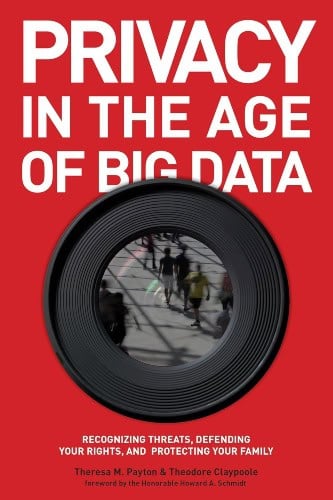
Privacy in the Age of Big Data: Recognizing Threats, Defending Your Rights, and Protecting Your Family

Digital data collection and surveillance gets more pervasive and invasive by the day; but the best ways to protect yourself and your data are all steps you can take yourself. The devices we use to get just-in-time coupons, directions when we’re lost, and maintain connections with loved ones no matter how far away they are, also invade our privacy in ways we might not even be aware of. Our devices send and collect data about us whenever we use them, but that data is not safeguarded the way we assume it would be. Privacy is complex and personal. Many of us do not know the full extent to which data is collected, stored, aggregated, and used. As recent revelations indicate, we are subject to a level of data collection and surveillance never before imaginable. While some of these methods may, in fact, protect us and provide us with information and services we deem to be helpful and desired, others can turn out to be insidious and over-arching. Privacy in the Age of Big Data highlights the many positive outcomes of digital surveillance and data collection while also outlining those forms of data collection to which we may not consent, and of which we are likely unaware. Payton and Claypoole skillfully introduce readers to the many ways we are ‘watched,’ and how to adjust our behaviors and activities to recapture our privacy. The authors suggest the tools, behavior changes, and political actions we can take to regain data and identity security. Anyone who uses digital devices will want to read this book for its clear and no-nonsense approach to the world of big data and what it means for all of us.

Read more..

Privacy in the Age of Big Data: Recognizing Threats, Defending Your Rights, and Protecting Your Family

Digital data collection and surveillance gets more pervasive and invasive by the day; but the best ways to protect yourself and your data are all steps you can take yourself. The devices we use to get just-in-time coupons, directions when we’re lost, and maintain connections with loved ones no matter how far away they are, also invade our privacy in ways we might not even be aware of. Our devices send and collect data about us whenever we use them, but that data is not safeguarded the way we assume it would be. Privacy is complex and personal. Many of us do not know the full extent to which data is collected, stored, aggregated, and used. As recent revelations indicate, we are subject to a level of data collection and surveillance never before imaginable. While some of these methods may, in fact, protect us and provide us with information and services we deem to be helpful and desired, others can turn out to be insidious and over-arching. Privacy in the Age of Big Data highlights the many positive outcomes of digital surveillance and data collection while also outlining those forms of data collection to which we may not consent, and of which we are likely unaware. Payton and Claypoole skillfully introduce readers to the many ways we are ‘watched,’ and how to adjust our behaviors and activities to recapture our privacy. The authors suggest the tools, behavior changes, and political actions we can take to regain data and identity security. Anyone who uses digital devices will want to read this book for its clear and no-nonsense approach to the world of big data and what it means for all of us.

Speaker Bureaus and Talent Agencies

Theresa Payton is available to book via these agencies
Recommended
KPA Speaker Management
Speaking Agency
Speakers Associates
Speaking Agency